In the Danish Golden Age, a trend and
school or teaching caught on. In this way, it was popular to create landscape
art in which people and sometimes animals were featured in the foreground and
the landscape was features mostly in the background. A trend was to have the
people in the picture there to show the scale of the landscape around them,
which was often bolstered up by the artist in an unrealistic way. Danish
landscape is not a harsh one, it is vast green lands, with gentle rolling hills
and soft coastlines, yet, during the Golden Age the landscape was not depicted
that way. For many years this was the
style of painting. Although the paintings were beautiful and are still famous
today, they were not realistic.
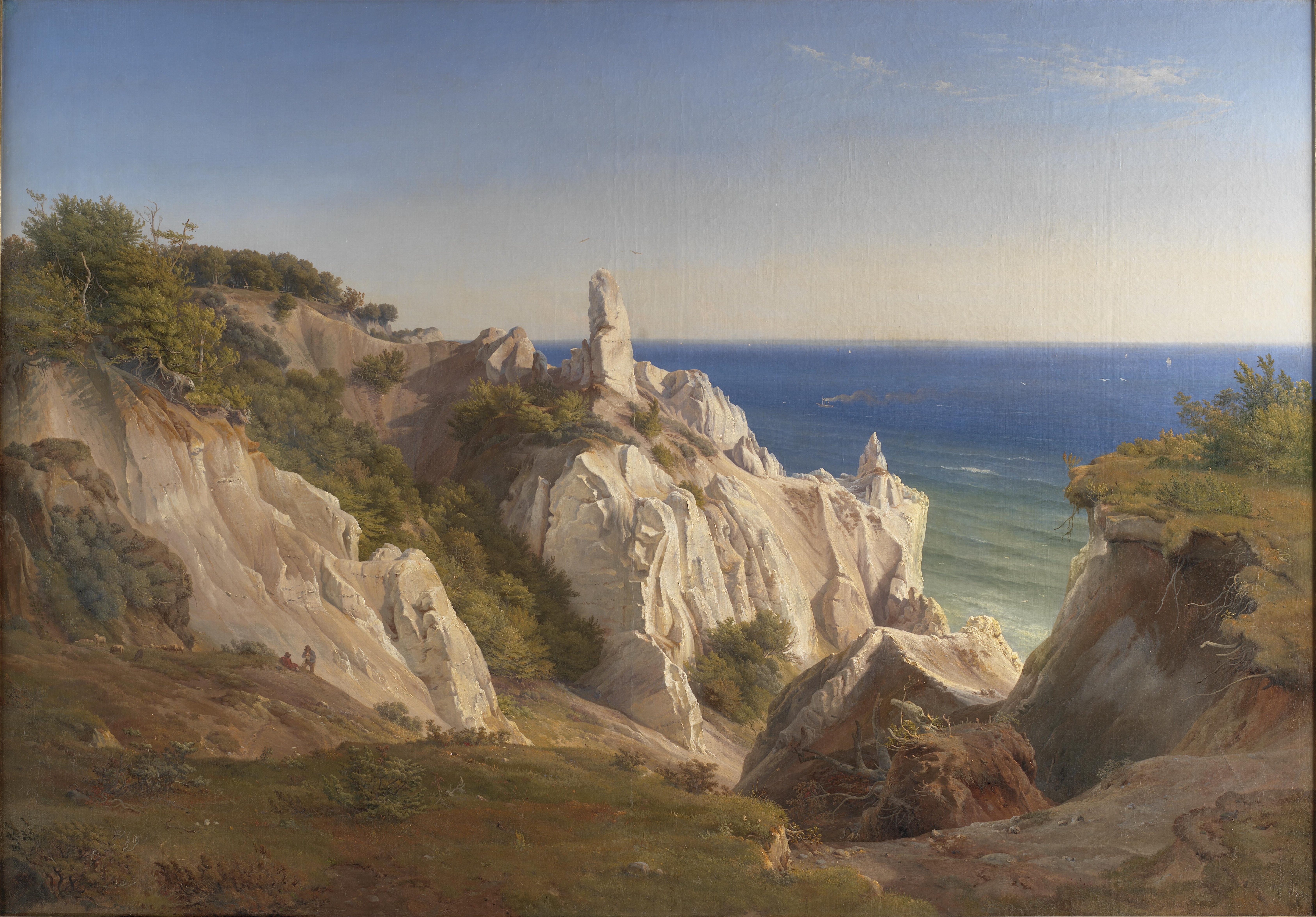
A golden Age painting by Møns Klint depicting an exaggerated Danish coastline
 A move towards larger people pictured in the foreground
At some point, there was a shift. Artists began
to make the landscape look more realistic, and in the museum we saw many
paintings of Denmark’s rolling hills, spotted with Viking burials mounds, and a
fascination with painting clouds emerged. Also, shifts in techniques used to
draw and paint changed throughout this time, and the use of a spatula to create
an almost obvious look of the paints presence was used. Popular, realistic paintings depicting
Denmark’s gentle coastline was also created, as well as paintings depicting
Denmark’s major way of life, being fishing. These paintings evolved, first they
were exaggerated, but towards the end of the Golden Age, a true perception of
not only the Danish landscape, but also the Danish culture (often shaped by the
land) was depicted in popular paintings. Additionally, towards the end of the Golden Age, a shift towards painting people on a larger scale in the foreground, with a non-exaggerated background also became the trend, which led into artists beginning to paint portraits, as well as the female body.
 A realistic Danish landscape (with Viking burial ground) by Johan Thomas Lundbye
No comments:
Post a Comment